
I am a first-year Ph.D. student in Computer and Information Science at the University of Pennsylvania, advised by Prof. Jiatao Gu. I received my master's degree from Zhejiang University and my bachelor's degree from Dalian University of Technology, and I was a visiting researcher at University of California, San Diego with Prof. Zhuowen Tu. My research centers on multimodal models and agents, with a focus on efficient long-sequence modeling, real-time interactive agents, and benchmarking and evaluation. I have co-organized workshops at CVPR 2024 and 2025.
I am looking for research internships for Summer 2027. Feel free to reach out at [email protected].
News
- Oct 2026 Two papers released on arXiv: InteractionBench, a real-time interaction benchmark for streaming video systems, and Video-Index, a curated meta-benchmark for video understanding.
- Sep 2026 HARMONY, hierarchical agentic reasoning for monocular image-to-scene synthesis, is released on arXiv.
- Aug 2026 Started my Ph.D. at the University of Pennsylvania, advised by Prof. Jiatao Gu.
- Jul 2026 One paper accepted by ACM MM 2026.
- Jan 2026 Our VideoNSA is accepted by ICLR 2026.
- Nov 2025 Selected (top 10%) to give a talk at the KAUST Rising Stars in AI Symposium 2026.
- Oct 2025 Video-MMLU received the Outstanding Paper Award at the ICCV 2025 Knowledge-Intensive Multimodal Reasoning Workshop, along with a travel grant.
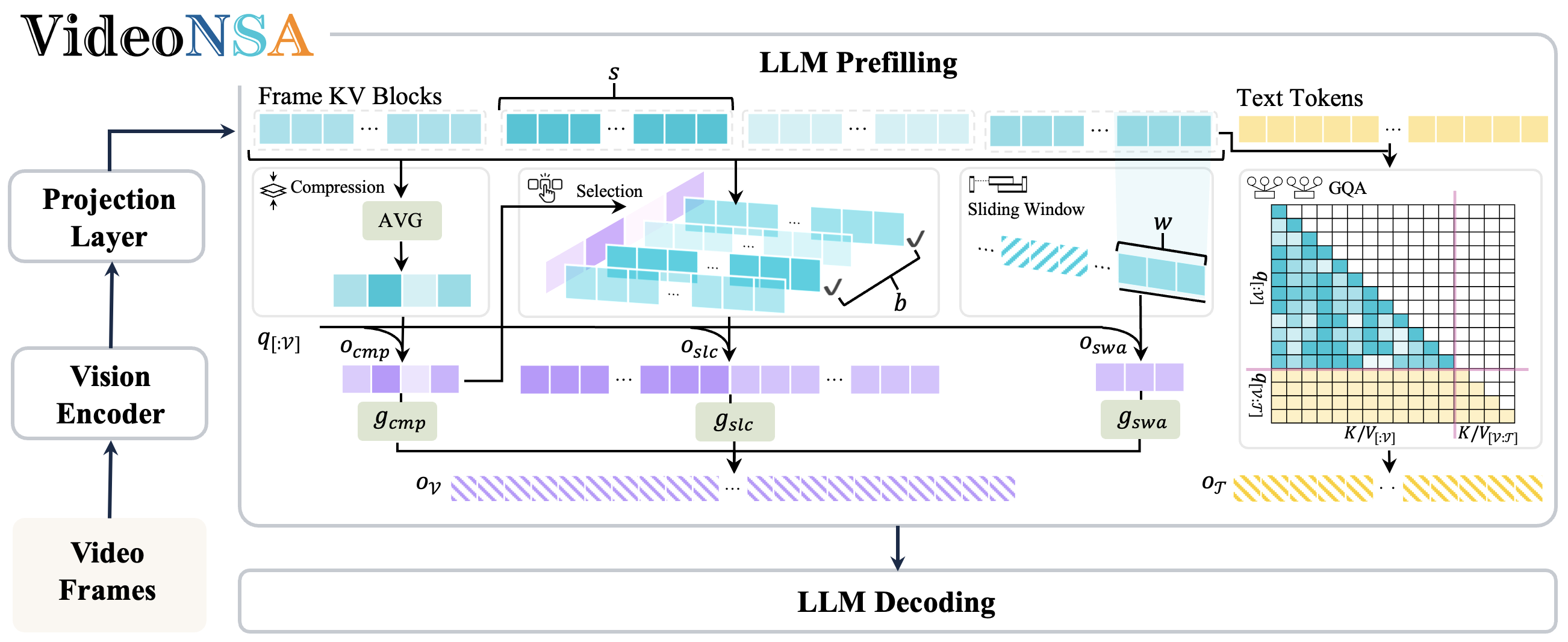
- Oct 2025 We release VideoNSA, a hardware-aware native sparse attention mechanism for video understanding.
- Sep 2025 Invited talk at Lambda AI titled From Seeing to Thinking.
- Sep 2025 One paper accepted by ICCV 2025 KnowledgeMR Workshop.
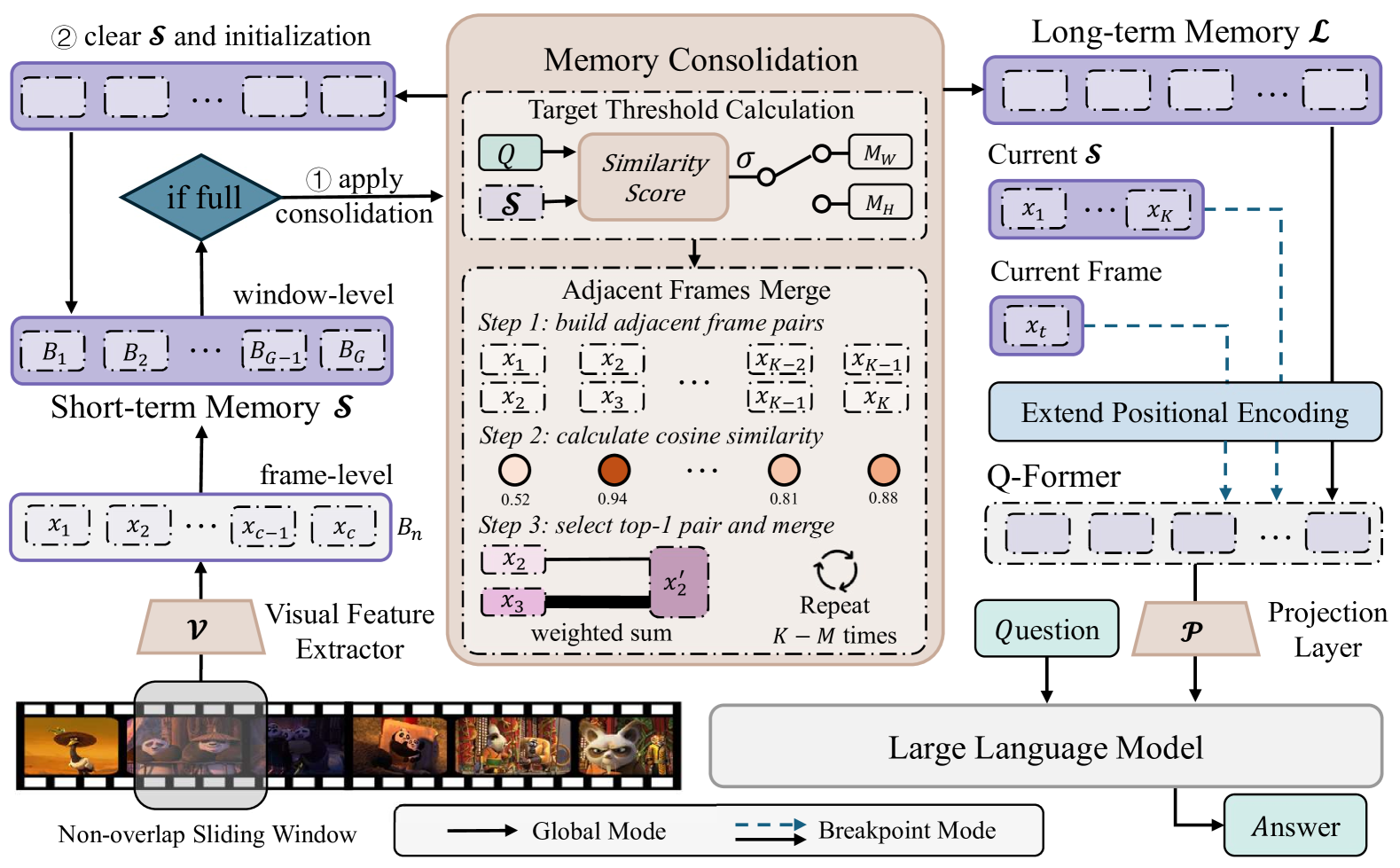
- Aug 2025 Our paper MovieChat+: Question-aware Sparse Memory for Long Video Question Answering is accepted by IEEE TPAMI.
Education



Research Experience


Invited Talks
-
Feb 2026
From Compression to Selection: Better and Longer Video UnderstandingKAUST Rising Stars in AI Symposium, Saudi Arabia · Slides
-
Oct 2025
Video-MMLU: A Massive Multi-Discipline Lecture Understanding BenchmarkWorkshop on Knowledge MR at ICCV 2025, Oahu, HI · Slides
- Sep 2025
Teaching
Selected Honors & Awards
- 2026
-
2025
Outstanding Paper Award, ICCV 2025 Knowledge-Intensive Multimodal Reasoning Workshop
-
2025
Lambda AI Cloud Credits Grant Sponsorship
-
2025
National Scholarship, Zhejiang University
-
2024
National Scholarship, Zhejiang University
-
2021
National Scholarship, Dalian University of Technology
Research Overview
My research centers on multimodal models and agents, with key areas of focus including:
-
Efficient Long-Sequence Modeling
, scaling models to long and streaming inputs such as video with sparse attention, memory, token compression, and recurrent architectures.
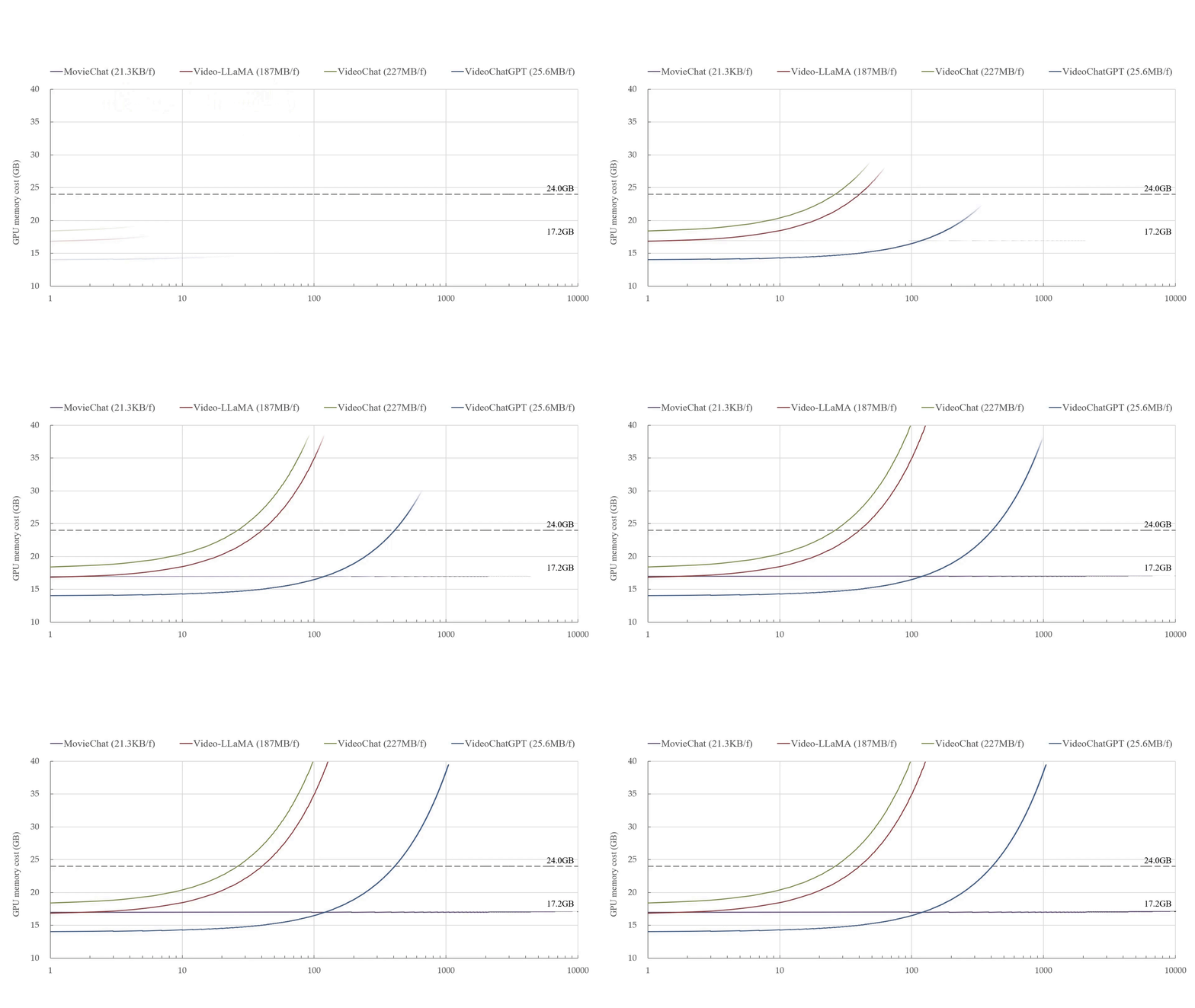
- Hybrid dense-token and sparse-memory designs for hour-long video MovieChat MovieChat+
- Token merging for efficient detailed video captioning AuroraCap
- Recurrent, linear-time models for open-ended video understanding AuroraLong
- Learned native sparse attention that scales to long video VideoNSA
-
Real-Time Interactive Agents
, building systems that perceive continuous streams and decide when and how to respond.
- Deciding when to speak and when to stay silent as a video unfolds InteractionBench
- Hierarchical agentic reasoning that builds a scene step by step from one image HARMONY
-
Benchmarking and Evaluation
, building benchmarks and evaluation toolkits that pose challenging real-world tasks, probe the boundaries of model capabilities, and provide insights for future improvement.
- Long-form and detailed video understanding MovieChat-1K VDC
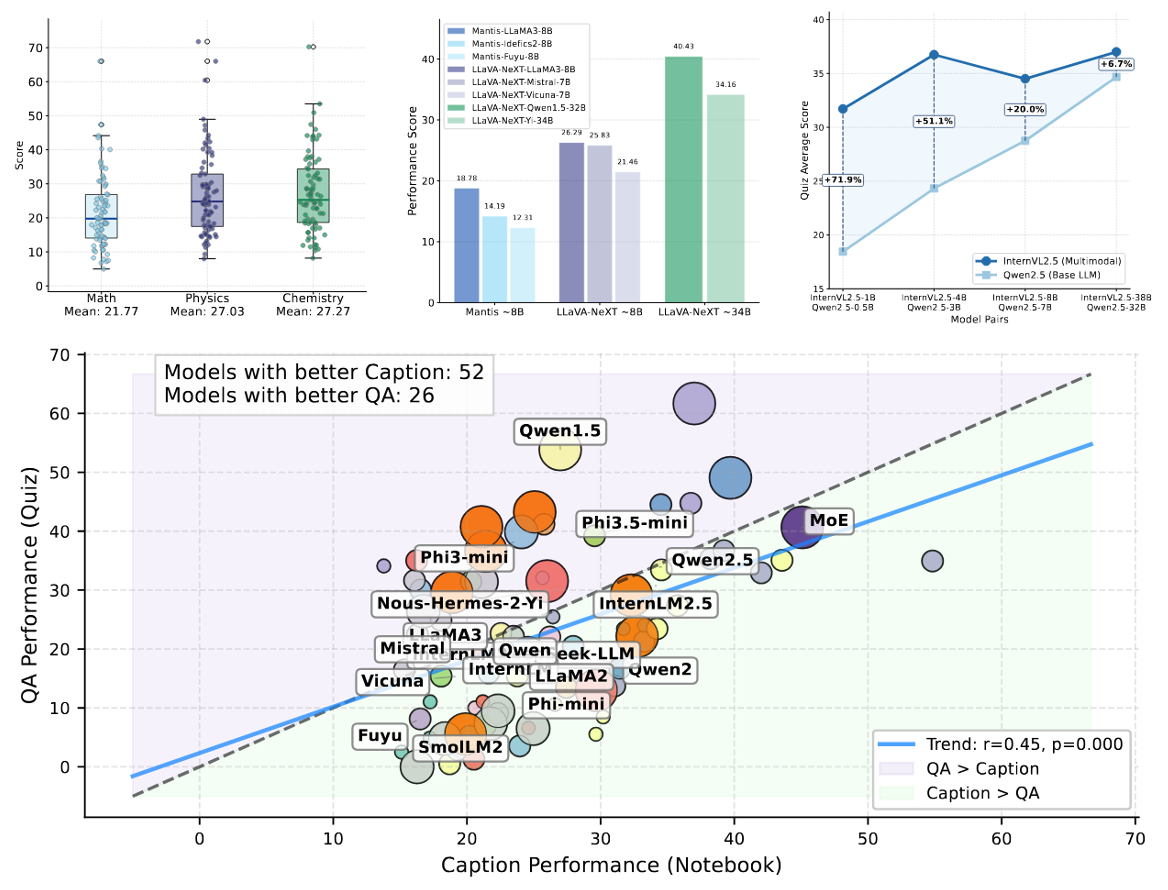
- Knowledge-intensive lecture understanding Video-MMLU
- Auditing whether video benchmarks measure what they claim Video-Index
Selected Publications and Manuscripts


HARMONY reconstructs complete 3D indoor scenes from a single image by combining hierarchical agentic reasoning with geometry-based refinement.

Video*Bench benchmarks fine-grained video perception under a "think with videos" evaluation protocol.



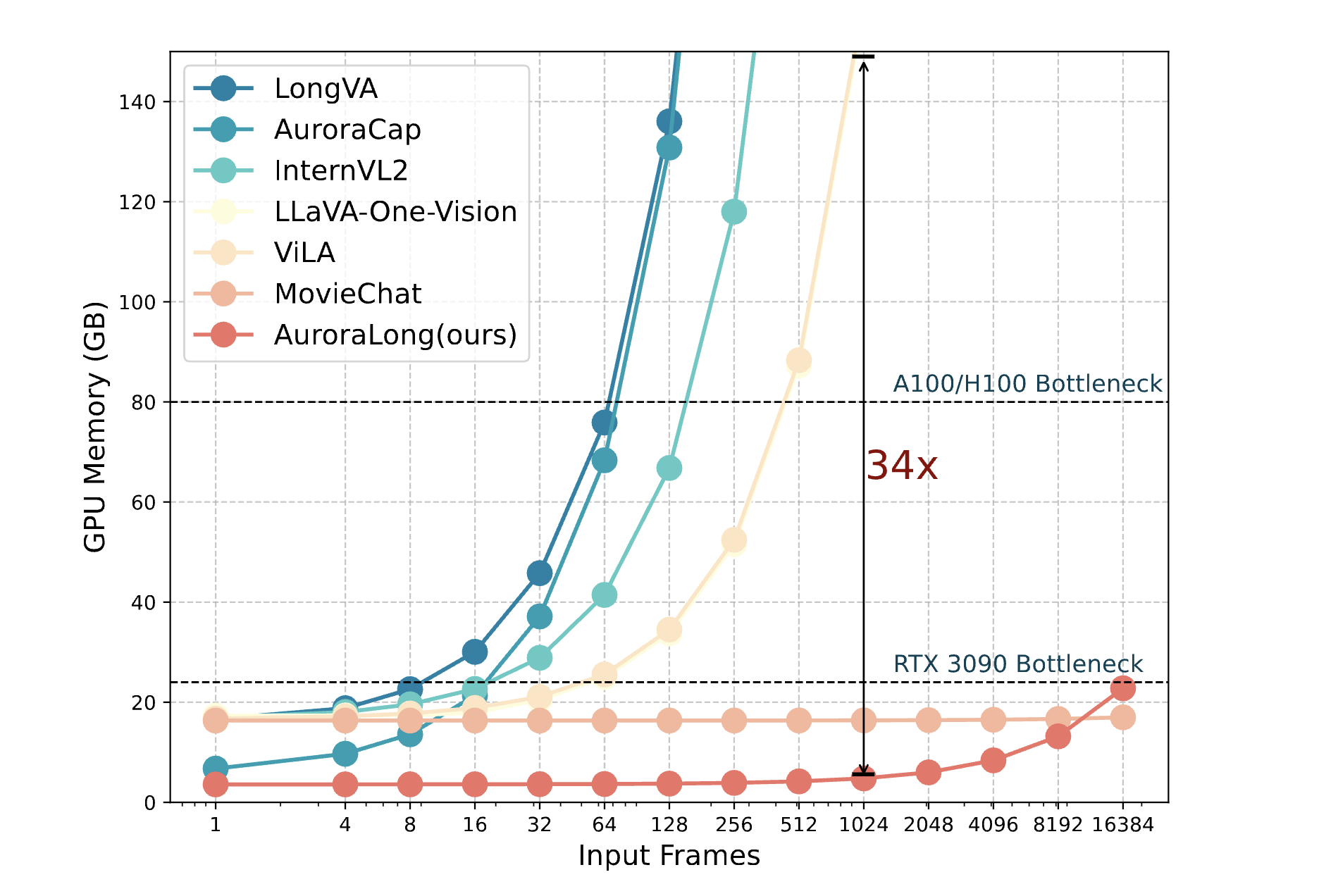
AuroraLong uses a linear RNN language model with constant-size hidden states to handle arbitrary-length video inputs.



Blog
Occasional writing on research, tools, and things I find interesting.